Fukuoka's "Path of Light" — A Once-in-a-10-Years, Rarely Seen Moving Sight
Blog by Kenshin, published in January 2026
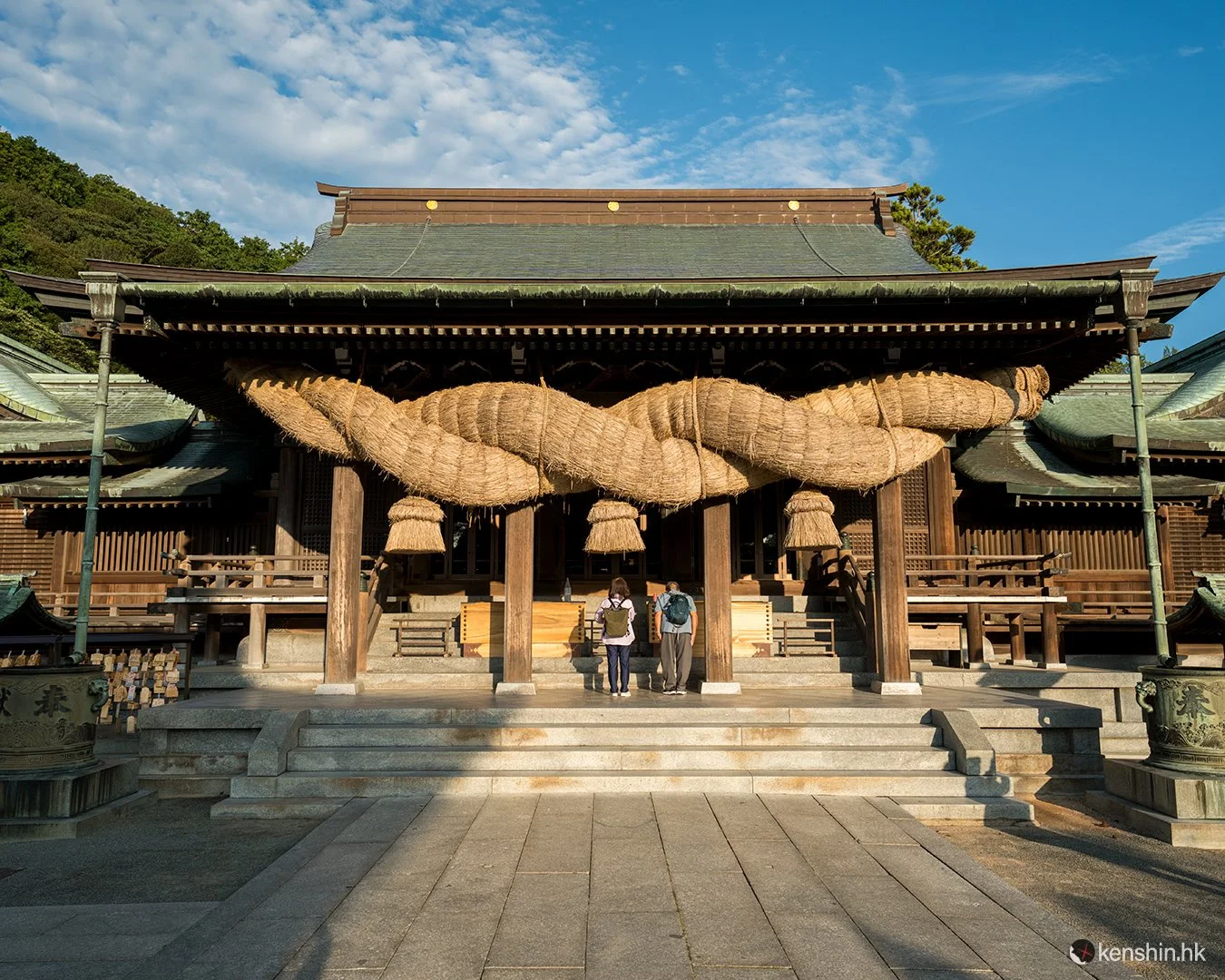
The story begins in early 2016, when the then-superpopular band Arashi filmed a commercial for JAL, all five members admiring the 'Path of Light'; that beautiful image instantly made the filming location, Miyajidake Shrine in Fukuoka, explode in popularity. I had longed to see it, but it was hard to make happen—the biggest reason being the high viewing threshold.
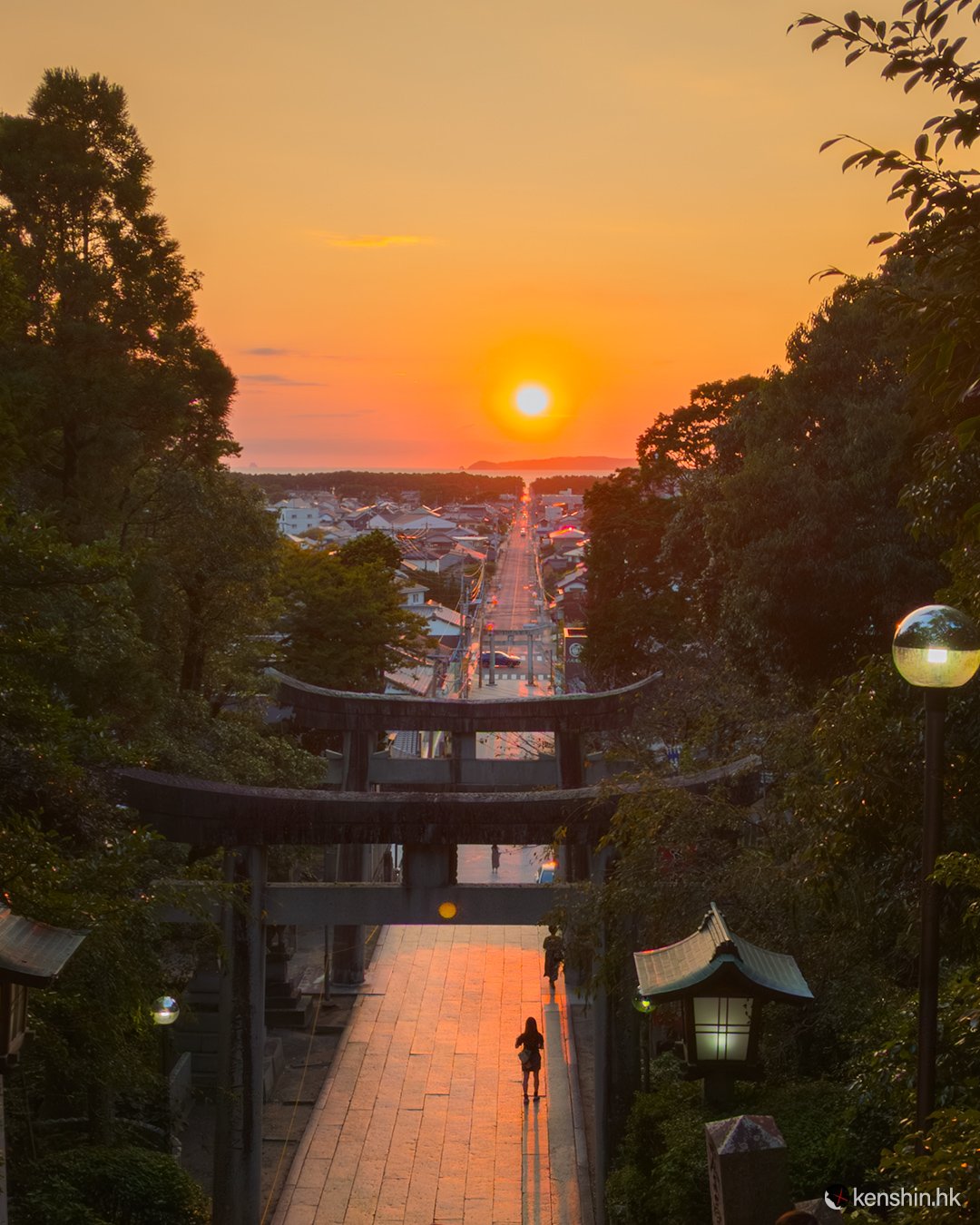
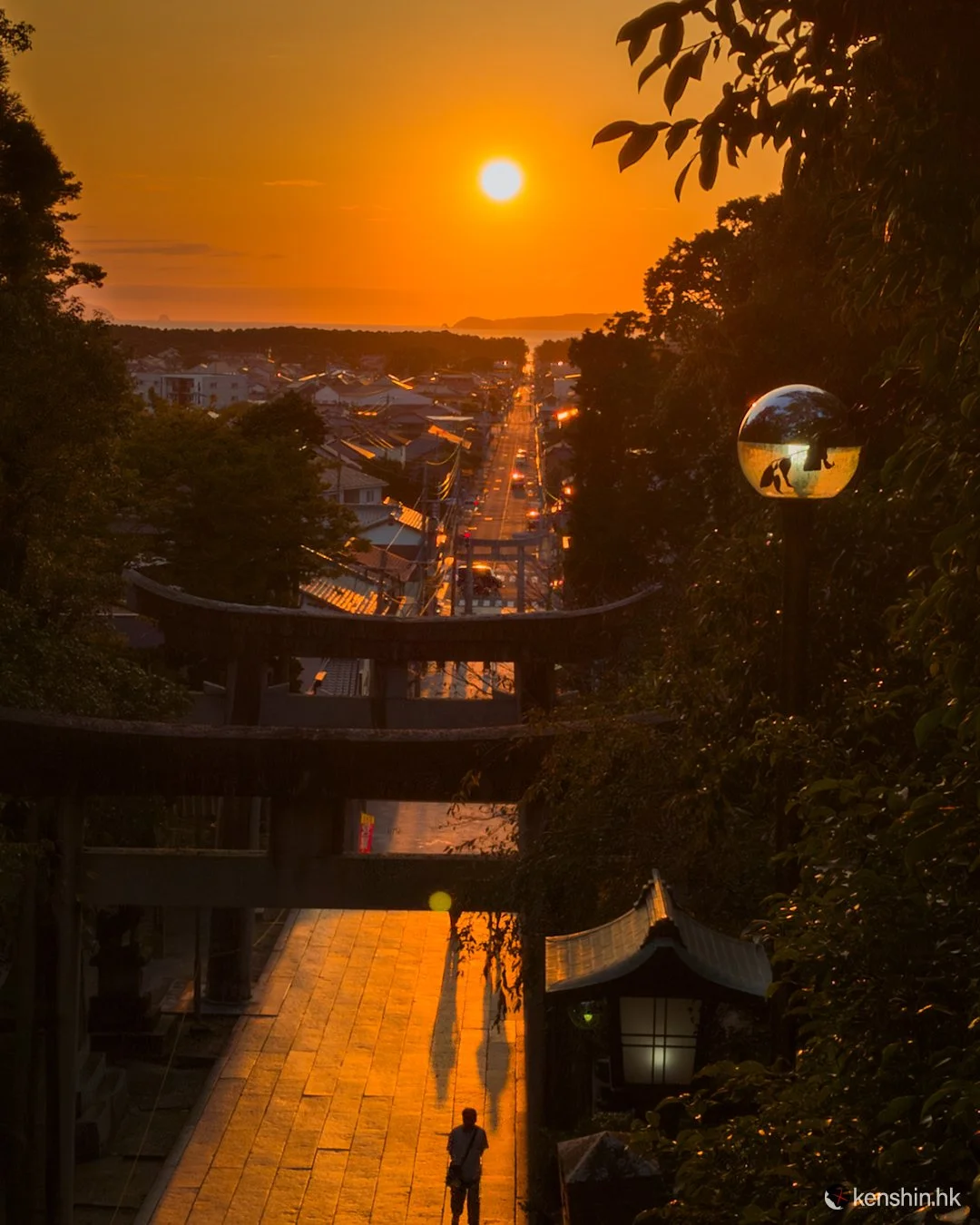
The main selling point is that the shrine's approach and the road line up straight to the Sea of Japan? Wait, Miyajidake faces the Genkai Sea (Sea of Japan?) But we shouldn't invent. Just "the sea". "As the sun sets, the golden light at the end of the road illuminates the entire road, forming the 'Path of Light'. However, due to the positions of the Earth and the sun, the sunset only falls at the end of the road for a few days in late February and late October. And of course weather matters—if it's cloudy or rainy and you can't see the sun, there's nothing to talk about.
Meeting those conditions is extremely difficult for tourists. Earlier I joined a Dassai brewery tour; when planning the itinerary I found there might be a chance to see it, so I adjusted plans and stayed extra nights in Fukuoka hoping for good weather. But before departure I checked the forecast and Fukuoka was predicted to be overcast with light rain all week, which dampened my spirits.
"Also, Miyajidake Shrine holds the 'Path of Light—Sunset Festival' from October 16 to 22, with special seating on the Path of Light; to get a seat you must register on-site at 9:20 a.m., which is time-consuming, so the last day you can freely watch in the afternoon without restrictions is October 15. That morning I woke to the pleasant surprise of excellent weather, and the Meteorological Agency's forecast had changed from cloudy to clear all day, so after lunch I immediately returned to the hotel to gather my gear and set off.
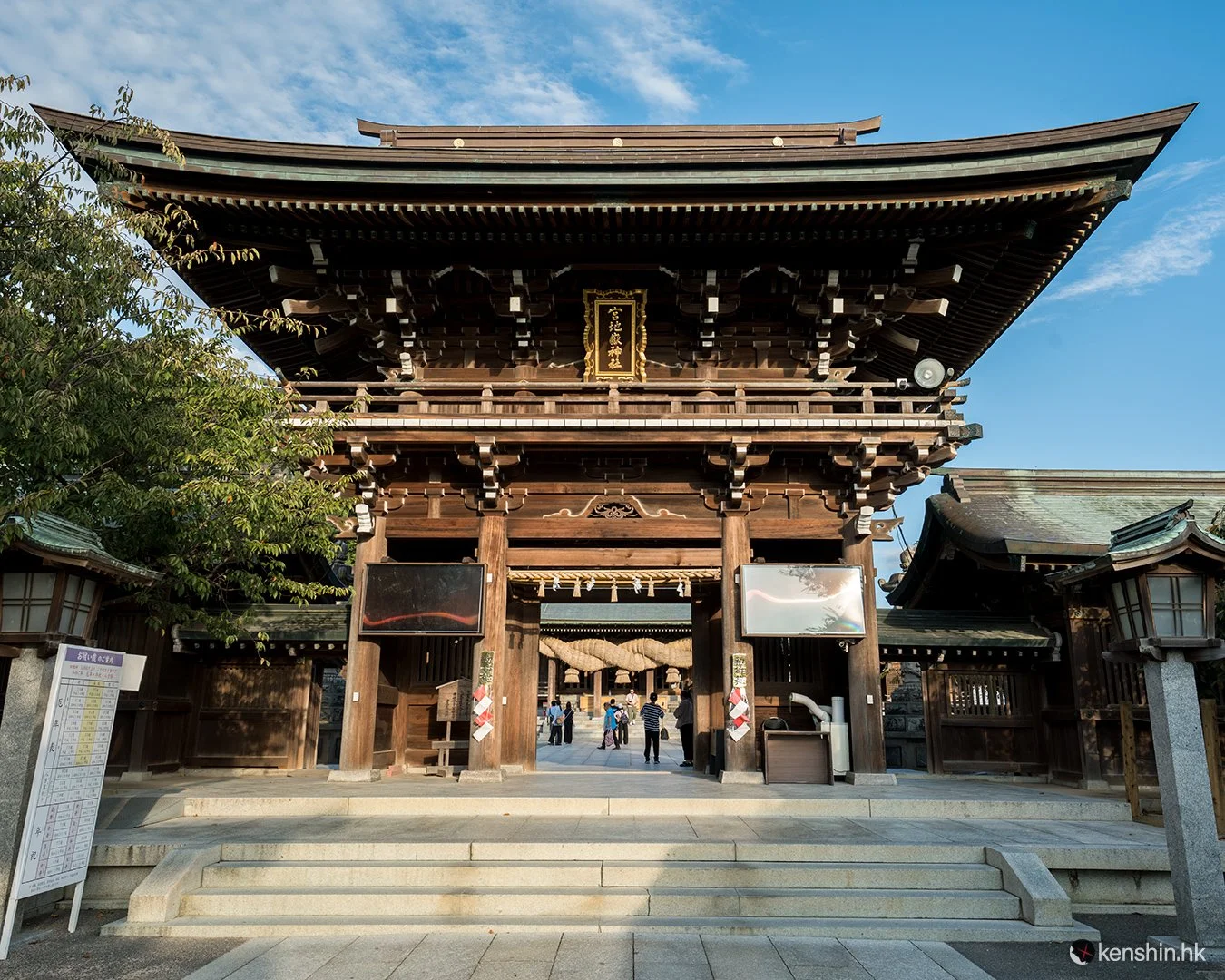
Miyajidake Shrine is actually not large; you can walk it in about an hour. The highlight is naturally the 'Path of Light', and the best viewing spot is at the top of the approach steps at the shrine entrance. By around five in the afternoon dozens of people had gathered there; I waited with them, taking rounds of photos every few minutes with both camera and phone. After all, it might be a once-in-a-lifetime opportunity."
The ideal shot is for the sun to set exactly at the end of the approach, but on that day when the sun reached that position there were only fifteen minutes left until sunset and the light was insufficient; about ten minutes earlier the light had been better and formed a clearer 'Path of Light'. It wasn't perfect, but I was very satisfied.
Undoubtedly, it was one of the most moving sunsets I've ever seen. Thanks to the heavens for the beauty, and thanks to the Dassai brewery tour for helping me achieve one of the top items on my day-trip bucket list. If you want to see it, plan a trip to Fukuoka in late February next year.
故事開始是2016年初,當時紅透半邊天的「嵐」為 JAL 拍攝廣告,五子齊齊欣賞「光之道」,那漂亮的畫面讓拍攝地福岡「宮地嶽神社」瞬間爆紅。當時我已心嚮往之,但一直難以達成,最大原因在於觀賞門檻極高。
那裡的最大賣點,是參道和馬路一直線從神社直通到日本海,如夕陽下山時在道路的盡頭,金黃色的光輝會把整條道路照亮形成「光之道」。然而受地球與太陽位置影響,夕陽僅會在2月下旬與10月下旬的數日間落在道路盡頭。當然更重要是天氣,多雲有雨看不到夕陽的話,就什麼都不用說。
要滿足這樣的條件,對遊客而言實在太難。早前我參加獺祭見學之旅,在規劃行程時發現有機會看到,於是調整安排,盡量在福岡多住幾晚,以期遇上好天氣。然而出發前查看天氣預報,福岡整週皆為密雲小雨,心已涼了一大截。
此外宮地嶽神社由10月16日至22日舉辦「光之道〜夕陽之祭」,在光之道設置特別席,想坐就要早上9:20到現場報名,太花時間和精神,於是能下午才去不受限制自由觀賞的最後一天就是10月15日。當天清晨醒來驚喜發現天氣極佳,再看氣象廳預報,竟由先前的多雲轉為整日放晴,於是用過午餐後便立刻回酒店取齊裝備出發。
宮地嶽神社其實不大,約一小時就可走完,重點自然是「光之道」,最佳觀賞位置在神社入口參道階梯的最上方,下午五時左右那裡已聚集數十人,我亦在那裡守候,每隔數分鐘以相機與手機各拍一輪。畢竟很可能是人生僅有的一次機會。
「光之道」拍攝理想狀態是夕陽恰好落在參道盡頭,但當日太陽抵達該位置時距離日落僅餘十五分鐘,光線不足,反而在此前約十分鐘光度較佳,更能形成清晰的「光之道」,雖非完美,但已經讓我很滿足。
毋庸置疑,這是我人生欣賞過最感動的日落之一。感謝天公造美,亦感謝今次獺祭見學之旅,讓我實現日遊清單上的其中一項最高目標。想欣賞的話,計劃明年2月下旬去福岡走走吧。
At a Hiroshima sake bar, I tasted more than fine sake — I experienced genuine human warmth
Blog by Kenshin, published in January 2026
I love visiting sake bars when I’m in Japan, and I see them in two modes. The first is drinking great sake—usually with friends who love sake but don’t speak much Japanese. Their main goal is to try famous labels like Juyondai, Aramasa, and Riko at reasonable prices. I’m happy to go along, so I’ve visited places like Kushikoma and Akaoni many times.
The second mode is drinking for the human connection, like the famous Japanese drama Midnight Diner—valuing conversation with the owner and other patrons. Between the two, I actually prefer this one. Recently I had half a day in Hiroshima and, with an afternoon free, I went to a sake bar called Nihonshu Bar KATOYA.
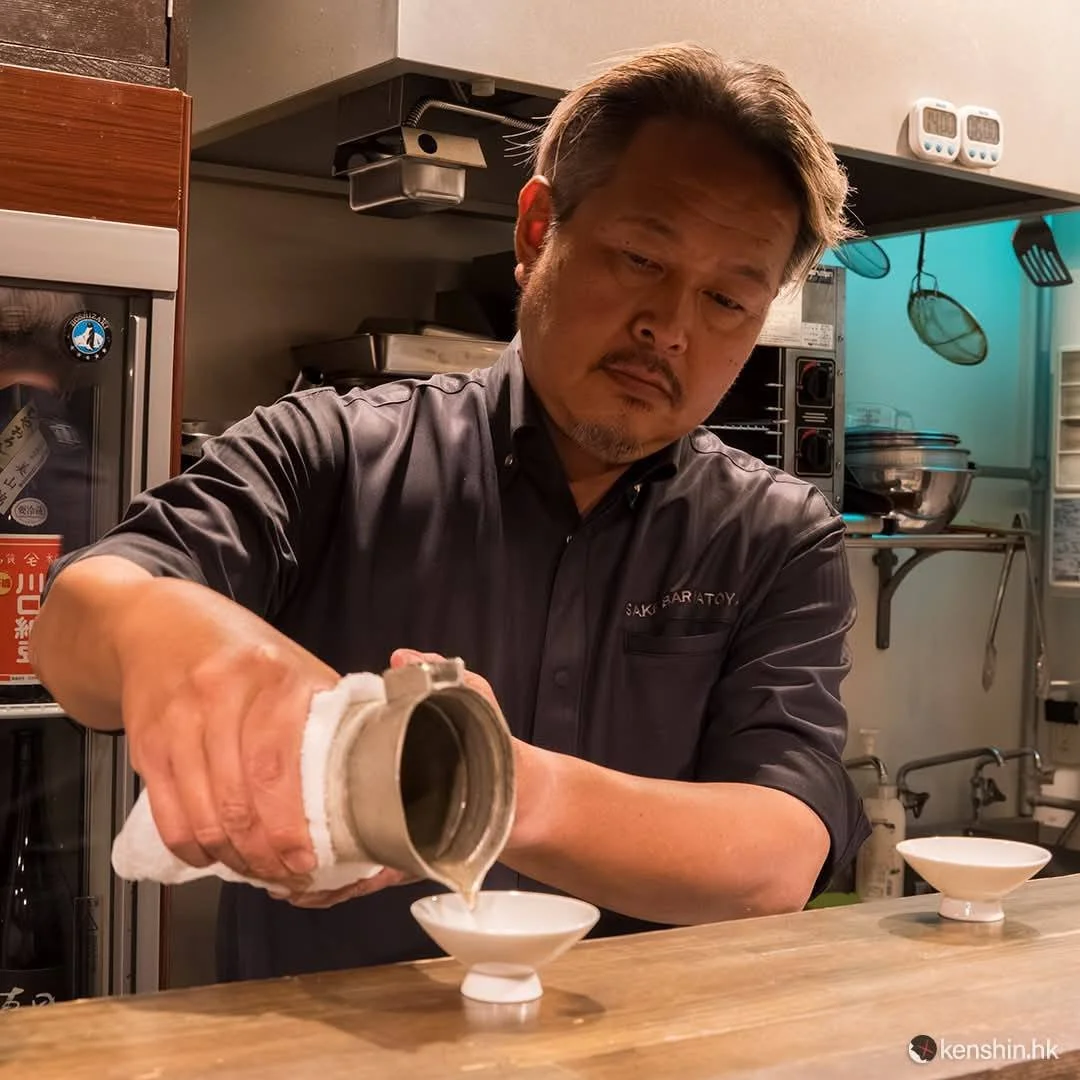
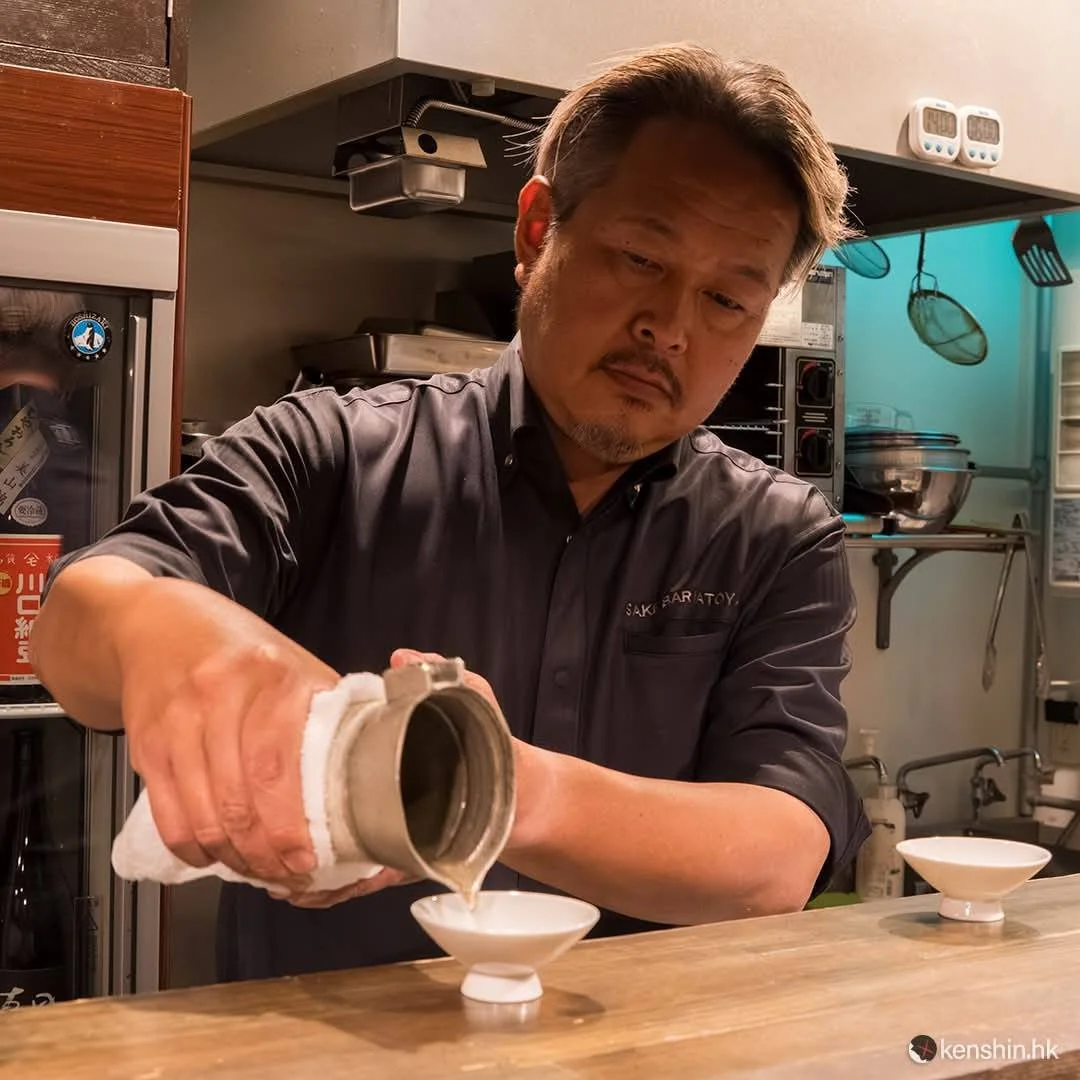
The shop is tiny with only seven bar seats. Because it was still early, I was the only customer and naturally struck up a conversation with the owner, Kato Koji. He doesn’t sell popular brands like Juyondai or Aramasa; he offers the bottles he personally likes. So I left the choices to him to experience his preferences and broaden my own horizons.
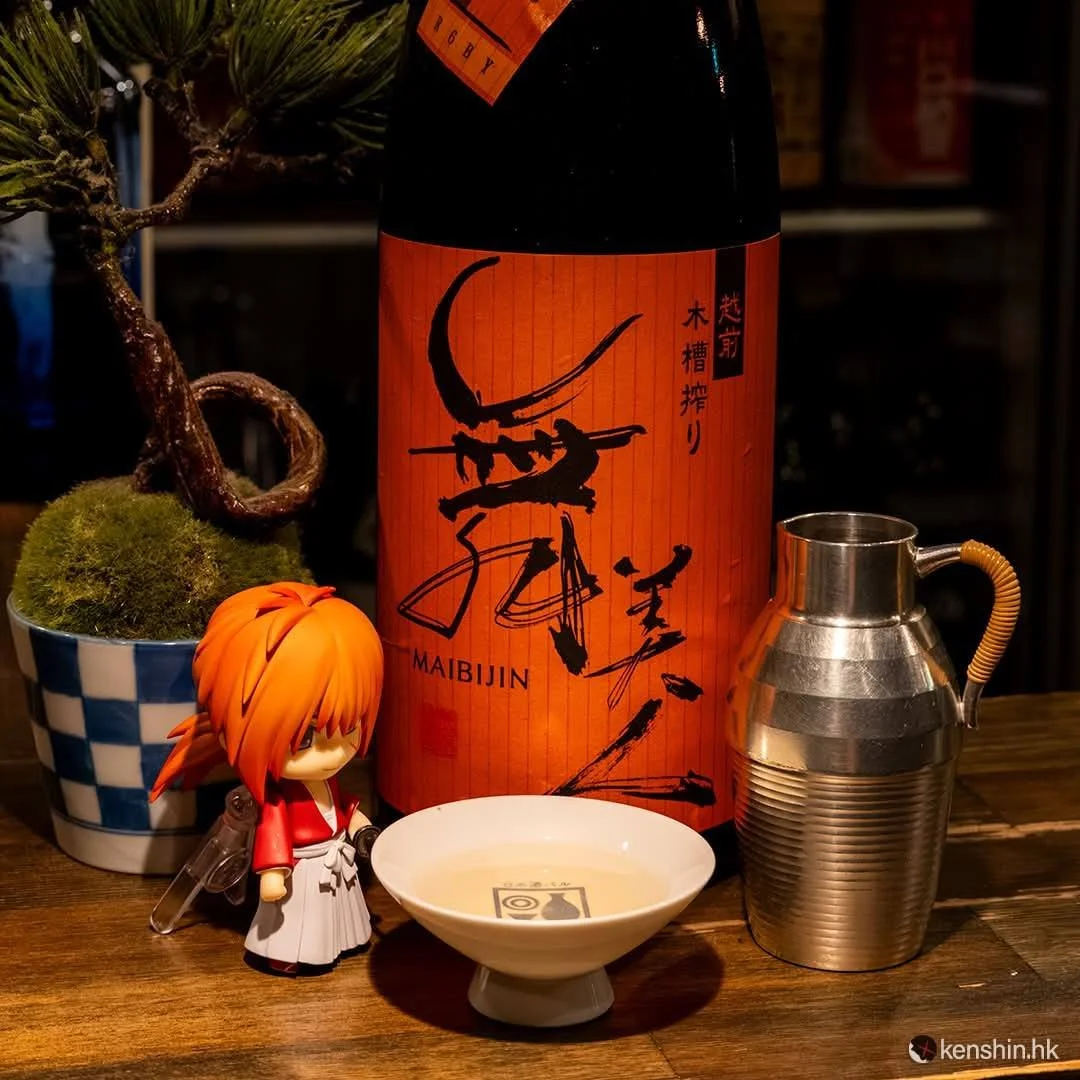
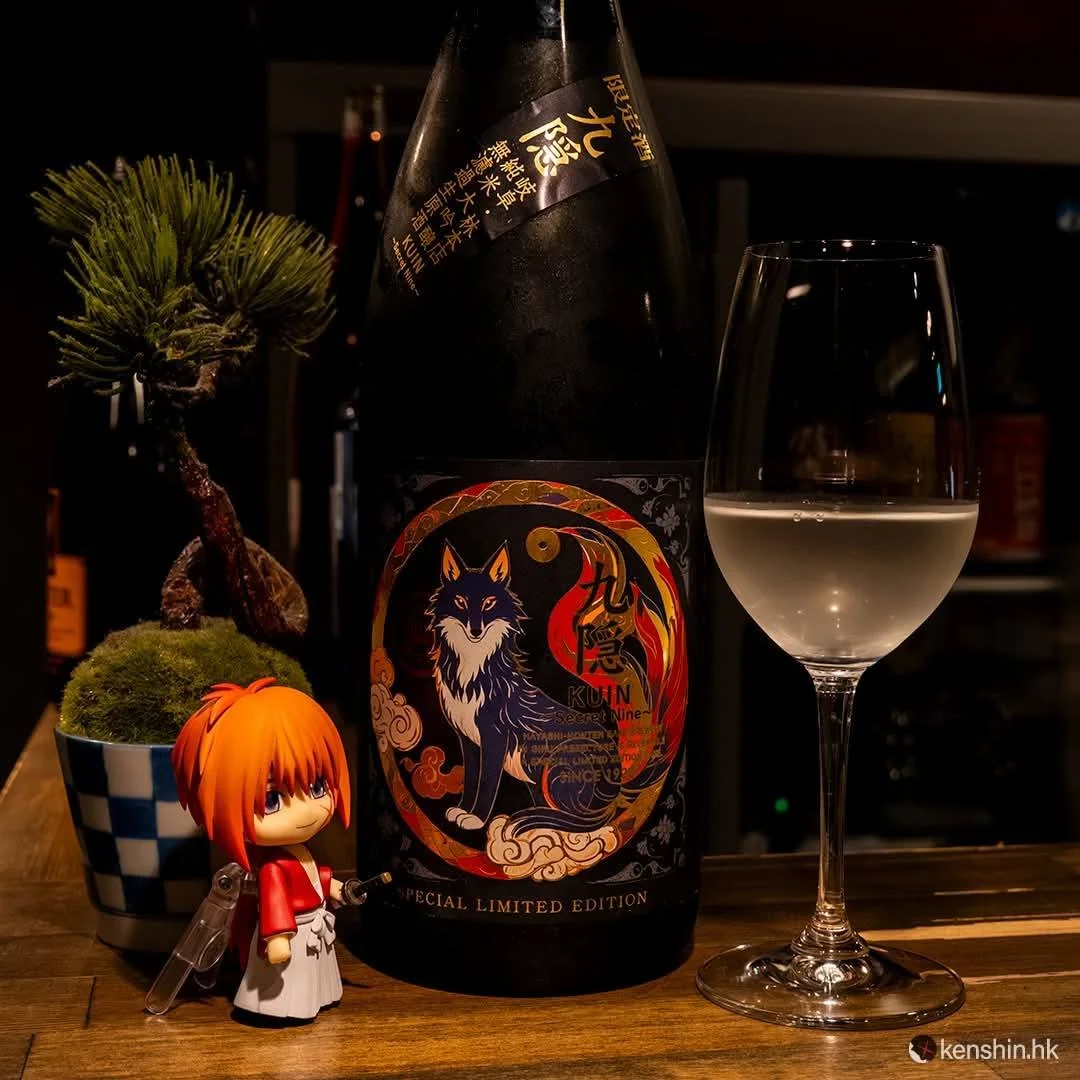
His selections tend toward traditional, full‑bodied styles—for example, Kuin Junmai Daiginjo, which is distinctly dry, and TSUKIYOSHINO Yamahai Junmai, with strong lactic acidity. He then introduced Maibijin Kimoto Junmai, a real powerhouse: sake meter value +22 and acidity 4.2—staggering numbers. It tasted even more striking when chilled, so I immediately asked him to serve it warm. He carefully let me sample it at 40°C, 50°C, and 60°C; I chose the 50°C expression and asked him to serve it at that temperature.
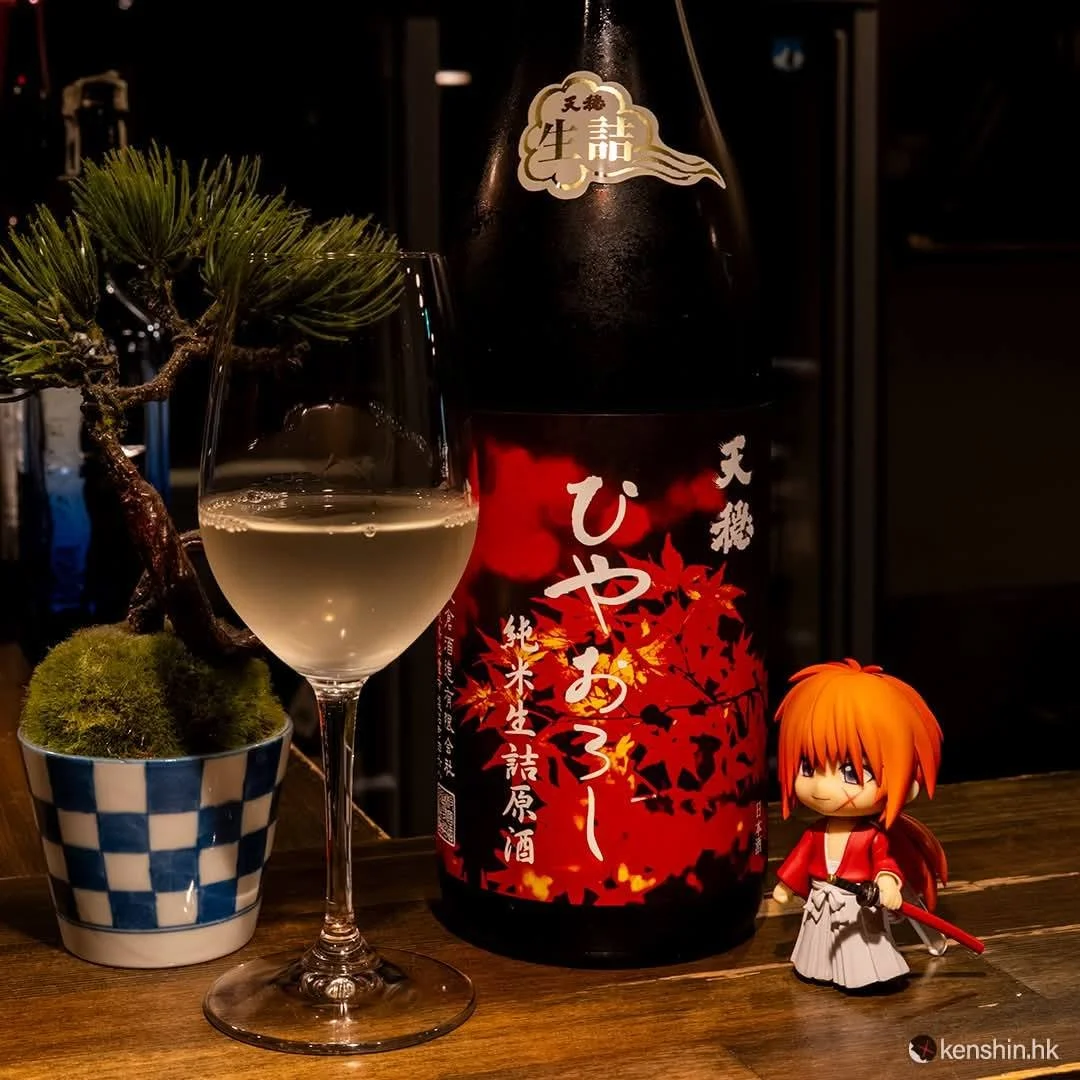
We then talked about his fondness for Tenryo and Taketsuru, and he offered me a taste of Taketsuru; he also mentioned his preference for niche items like warm plum sake and pure‑rice mirin. When I used my phone, he stayed quietly unobtrusive, keeping an appropriate distance from customers—very much like the owner in Midnight Diner.
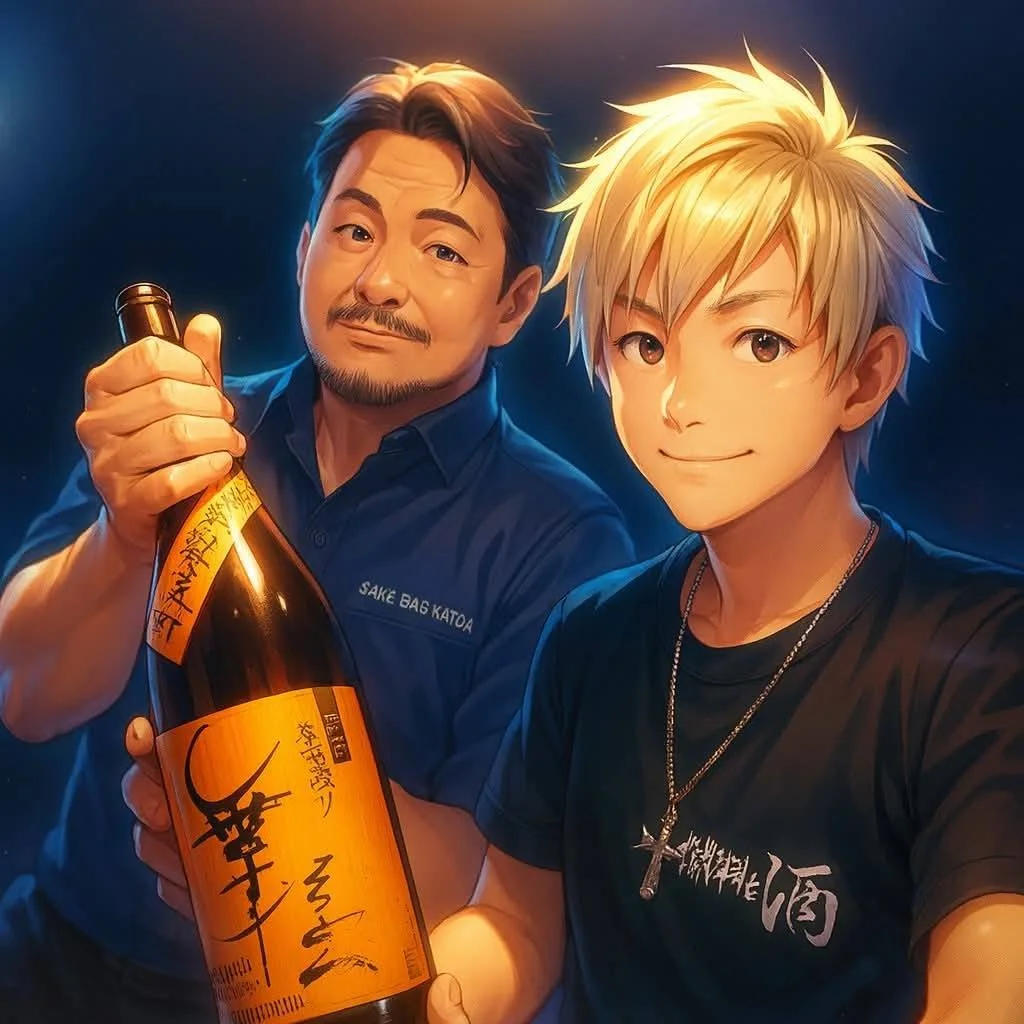
Before I knew it, I had been there for over two hours. After paying, I took a photo with him and left feeling very comfortable and at ease. This kind of experience may not suit everyone, but when I visit sake bars in Japan I cherish these subtle, deep exchanges. If I return to Hiroshima, I will definitely go back. If you enjoy this kind of atmosphere and can speak some Japanese, I recommend you give it a try.
我到日本很喜歡光顧 Sake Bar,當中分兩個模式,第一種是「喝美酒」,多數是和愛日本酒但不太懂日語的朋友一起,他們的最大目標是平價喝到十四代、新政、而今等名酒,我很樂意和他們一起去,因此已去了「串駒」「赤鬼」等很多次。
第二種是「喝人情味」,就像著名日劇《深夜食堂》那樣,重視和老闆及其他客人的交流,兩者之中我其實更愛這一種。早前在廣島逗留半天,下午有空閒時間,就到了這一家「日本酒バルKATOYA」。
店很細小只有個7吧枱座位,因為時間尚早,店內只有我一位客人,於是自然地與店主加藤幸二攀談起來。他不賣「十四代」「新政」等熱門品牌,只提供自己喜歡的酒款。既然如此,便交由他發辦,感受他的喜好,同時擴闊自己的視野。
他所選的酒多偏向傳統而濃厚的風格,例如「九隱 純米大吟釀」辛口感明顯、「TSUKIYOSHINO 山廢純米」乳酸感強烈,最後更介紹「舞美人 生酛 純米」這款堪稱大魔王的酒。日本酒度+22、酸度4.2,數值驚人,冷飲感覺更驚人,我便立刻請他轉為燗酒。他細心地讓我分別試飲40、50、60度,最終我選擇50度的表現,並請他以該溫度上酒。
之後聊到他喜歡「天穩」與「竹鶴」的故事,主動請我品嚐竹鶴;又談及他偏愛小眾酒,如「燗梅酒」「純米本味醂」等。其他時間我用手機時,他安靜不打擾,與客人保持適當距離,風格有點像深夜食堂的老闆呢。
不經不覺喝了兩個多小時,結帳後與他合照一張才離開,整體相當舒適自在。這感覺或許並非人人喜歡,但我造訪日本酒吧,正是喜歡這種細緻而深入的交流。日後若再到廣島,定會再次光顧,如你也喜歡這感覺,又懂說日語的話,推薦你去感受一下。